

September 2022 By Claire Joyce
Sensory processing is the ability of the nervous system to continually and accurately register information from our environment through touch, smell, sound, vision, taste, movement, and gravity, and to modify it and create an appropriate response to the incoming sensory stimuli. Adequate sensory processing and regulation skills are necessary for children to adapt to the changing demands of their environment so they can maintain an optimal performance level to play and learn so they can reach their social, academic and functional potential.
It is believed that sensory processing challenges are neurologically based problems stemming from the brain’s inability to integrate the sensory input it receives from the sensory systems and turn the input into effective responses. Evidence also supports that sensory processing difficulties may be linked to family genetics, pregnancy or birth complications, or to environmental factors such as limited exposure to sensory stimulation. At present however, there is no recognised definite cause of why children present with sensory processing issues.
What Happens When A Child Has Sensory Processing Difficulties?
When sensory processing difficulties are present, major and minor sensory events can create changeable levels of stress and anxiety in children and influence the way they behave and respond to their environment. Sensory processing difficulties will subsequently affect the way the child behaves, interacts, attends to a task, and how they regulate their emotions within their environment (14).
A child can have difficulties processing information from any one (or more) of the Eight senses:
- Tactile (Touch)
- Auditory (Hearing)
- Gustatory (Taste)
- Olfactory (Smell)
- Vision
- Interoception (Registration)
- Vestibular (Movement & Balance)
- Proprioception (Muscles and Joint)
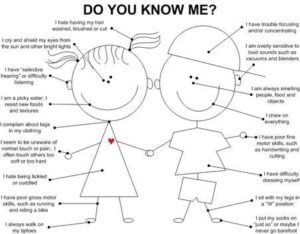
A child who presents with sensory processing difficulties may be over responsive or under responsive to the particular sensory input. Symptoms of poor sensory processing appear to evolve over time and vary considerably depending on the sensory system(s) involved. Characteristics of sensory processing challenges may fluctuate within the day, from day to day, and across different demands.
Quite often the behaviours children with sensory processing difficulties show are very visible and evident. It’s is recommended to monitor and document a child’s behaviour to track and record their reactions to certain environments or sensory stimuli to identify their patterns and triggers and to have these to share these with the professionals involved.
Effective treatment for sensory processing challenges should be research-based and family-centred, and may involve a multidisciplinary team.
- Paediatricians
- Developmental-behavioural paediatricians
- Psychologists, including neuropsychologists
- School evaluators
- Occupational Therapist
Treatment from a therapist(s) steeped in evidence-based practices increases the likelihood that strategies will be implemented effectively.